15 Infamously Filthy People From History

Originally published as "15 Famously Filthy People From the Pages of History" at:
ty.rannosaur.us
but no longer there.


Even though the rules of hygiene were extremely relaxed during some periods of history, the following 15 people – royalty, actresses, philosophers, and more – became known not only for their accomplishments but also their disastrous hygiene.

1. Benedict of Aniane


Saint Joseph once preached, “He who has bathed in Christ has no need for a second bath.” Early Christians took this literally and never bathed. Benedict was an odd monk that spent most of his life in rags, rarely eating, and speaking only in awkward outcries. He was canonized for saving monasticism in the 8th century, through which he spread the idea that bathing was a vanity that facilitated sins of the flesh. This meme stuck with Christians until the 18th century.

2. Henry IV of France


One of the most popular French kings, Henry tried to provide his citizens with a “chicken in the pot every Sunday.” Even though he believed in changing his shirt every morning, a rarity in 16th century France, he also loved hunting and refused to bathe or mask his odor with cologne afterwards. His mistress often told him he smelled like carrion. His second wife fainted from his stench the first time she met him and doused herself with perfume just to have sex with him on their wedding night.

3. Miyamoto Musashi
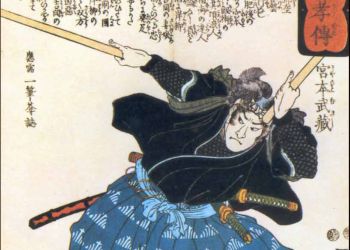

The Japanese have a long history of promoting hygiene, but Musashi was a different story. He spent most of the 17th century wandering Japan as a vagabond warrior, sword fighting anyone he ran across. His fighting style involved wielding two swords above above his head and was so complicated that none of his pupils ever mastered it. He never married, cut his hair, or bathed unless he was visiting a feudal lord because he did not want to be caught unprepared. Besides, there were better things to do like sword fighting.

4. Louis XIV of France


During the 72 year reign of Louis, France established an absolute monarchy, Versailles was built, and The Sun King waged war with everyone. Possibly hydrophobic, he refused to bathe unless his doctors forced him to and took two, possibly three, baths his entire life. He preferred to be dusted with scented powder and washed his face with a rag soaked in alcohol. Louis refused surgery on a gangrenous foot, leading to his death, and would lose chunks of it around Versailles.

5. Frederick II of Prussia


Frederick transformed Prussia from a European backwater to a world powerhouse, and then spent the rest of his life shuffling around Sanssouci with a pack of Italian greyhounds, berating anyone that cleaned up the ankle-deep dog shit. Possibly insane, he started refusing to bathe and stopped changing his clothes for years. When he died, in 1786, the shirt on his back was so rotten with sweat that his valet used one of his own to bury the king.

6. Charles Howard


A staunch opponent of George III, the 11th Duke of Norfolk rebuilt and refurbished Arundel Castle. In a time when bathing was starting to gain acceptance, he never took a voluntary bath his entire life and became known as the “Dirty Duke” as a result. His valets would trick him into it by getting him drunk and then scrubbing him down. He once complained to Dudley North that he had tried everything to cure his rheumatism. North quipped, “Pray, my lord, did you ever try a clean shirt?”

7. Ludwig van Beethoven


Influenced by the Enlightenment, a deaf Beethoven pushed Romantic music to the forefront in the 18th century. His refusal to bathe stemmed from the constant pain of lead poisoning. It also made him extremely crabby at concerts, he commonly threw things at people talking during his concerts. A speech impediment made it hard to understand Beethoven and often resulted in violent tirades if he was asked to repeat himself. The few friends he had would sneak away his clothes to wash while he slept.

8. Karl Marx


As the mind behind Communism, Marx wanted the working class to rise up but instead helped totalitarian regimes justify their existence. He suffered from pus leaking carbuncles and boils that were worsened by chain smoking, heavy drinking, and belief that cleanliness was a bourgeoisie excess. Marx took pride in pages of the original manuscript of Das Kapital that were splattered with blood from his lanced boils, claiming that it proved he understood the plight of the proletariat.

9. Henrietta Green


With an estimated net worth of $3.8 billion, Green became one of the richest women in history through her extreme frugality. She avoided surgery on a hernia because it cost $150, ignored her son’s broken leg until it had to be amputated, and tried to swindle a dying aunt out of money. The few times she bathed, she did so without hot water and soap, and she spent her entire life in a series of black dresses that she wore until they wore out. In her later years she became extremely paranoid and died while arguing about skim milk.

10. Diego Rivera


A famous Mexican muralist, Rivera helped bring art to the common Mexican by kick-starting the Mexican Mural Renaissance. He was also briefly married to Frida Kahlo and became famous for his constant cheating. Incredibly obese, often ballooning beyond 300 pounds, and avoided bathing (possibly because he didn’t see the point of if he could meet women without it). When one of his wives, Lupe Marin, met him for the first time she asked, “Is this the great Diego Rivera? He looks horrible to me.”

11. Chairman Mao Zedong


Mao’s harsh socio-political programs killed millions of his countrymen but helped turn China into a world power. He never brushed his teeth or bathed his entire reign. Instead, concubines were forced to scrub his body with damp towels while be chewed tea leaves to clean his teeth. When offered a toothbrush by one of his physicians, Mao refused on the grounds that tigers didn’t brush their teeth either. You can’t argue with that logic.

12. Geoffrey Pyke


A British spy during WWII and an innovator, Pyke is best known for developing pykrete, a type of ice that is extremely slow to melt. He wanted to use this material to build a fleet of ships that were impervious to U-Boat attacks. A typical boffin, he abhorred wearing socks and usually presented himself in a rarely washed suit. Pyke also hated bathing, rarely shaved, and avoided cutting his hair. Conversations with Pyke were just as wild as his appearance, as he often launching into extremely technical diatribes when questioned.

13. Howard Hughes

hughes 300x214 15 Famously Filthy People From the Pages of History

Hughes transformed from a polished, handsome aviator and movie producer to a 90 pound skeleton that only trusted Mormons. It started in 1957, when he locked himself in a studio with milk, chocolate, and Kleenex to watch movies completely naked. Upon emerging, he refused to bathe and trimmed his hair and nails only once a year. He became a recluse, living in Las Vegas and the Bahamas, and was so unidentifiable when he died that police had to use his fingerprints to make sure it was actually Hughes.

14. Ernesto Guevara


The Argentine revolutionary, Che Guevara helped Fidel Castro bring Communism to Cuba. He loved rugby, cigars, and Rolexes, but hated bathing his entire life. As a child he was called “Chancho”, pig, by friends and took pride in wearing the same shirt for a whole week. He kept this trend going through most of his life, rarely bothering to bathe or change out of his olive green fatigues. He became one of the most famous t-shirts in history after he died.

15. Marilyn Monroe


Considered an example of the feminine ideal, Monroe went through a long string of lovers that included Joe DiMaggio and John F. Kennedy. But according to a Clark Gable biography, Gable described her as extremely dirty, and not in the sexual sense. According to Gable she suffered from irritable bowel syndrome, rarely bathed, and ate exclusively in bed – shoving what was left under her bed.

| | 0 comments

The Battle of Mactan


It’s indeed sad that hundreds of years ago today, Fernando Magallanes, aka Ferdinand Magellan (hailed so inaccurately by careless historians as the first man to circumnavigate the globe), was killed by a mere “fish” now considered as a Filipino bayani (hero).

Lapu-lapu, as all Pinoys are aware of, is the name of a tasty fish, a local variety of the red grouper. The Mactán chieftain’s real name was Cali Pulaco (some say it’s Kaliph Pulaka). Cali was a local title that is, as far as we know, no longer in use. It’s a royal title like that of a datu or a rajáh, but of a much lower rank.

Naming a high-ranking chief with the name of an edible animal, especially of a fish dish –then as now– is disrespectful. The reason why the Mactán “hero” is now known by the name of a fish was a mistranslation by some careless historians (Blair and Robertson?).

And Fish King wasn't the real chieftain of Mactán. The island was actually under the jurisdiction of Cebú's Rajáh Humabon. Pulaco was just a subrogate (and belligerent) ruler of Mactán, together with Datu Zula. Since by that time Humabon was already baptized into the Christian faith, Magallanes thought it best to support an ally of Spain. But that doesn’t mean that Magallanes wasn’t eager to show-off European superiority of arms. He did the unthinkable, sailing straight to enemy grounds without the usual reconnoitering done my military experts. He thought that his cannons and European firepower (which were, of course, modern at that time) will overcome mere bolos and spears and arrows.

He was mistaken: the Portuguese and his malnourished men (they encountered unimaginable hunger during their voyage from Spain to the Philippines) was met with not a hundred men – he was met with more than a thousand island warriors. And the rest, you already know.

What is not known –or what is not emphasized– is what in the world were those Mactán warriors thinking of while they were battling the white men. What should be taught in local schools is that Mr. Big Fish and his school of spear-wielding island fellas have never heard of Europe, nor of Spain and the Spaniards. And most important of all, educators should teach THE TRUTH and nothing but the TRUTH that Lapu-lapu never thought of “defending the Philippines from foreign invaders.” For all we know, those islanders thought that they were defending themselves from Chinese pirates who were known to have marauded some local tribes and brought with them prisoners whom they have sold in the thriving slave market.

So why teach that Lapu-lapu was the ”first Filipino” to defend the Philippines from colonization? There was no Philippines during that time. The concept of a country wasn’t extant back then. What was in existence were hundreds of warring tribal kingdoms, each thinking that they were –and should be– independent from the other. In short, they were not united (the Philippines is on the verge of reverting back to this kind of setup once federalists gain the upper hand in the government).

Lapu-lapu was defending the island of Mactán, not the “whole” Philippines. Actually, he was defending an island which wasn’t really his in the first place; he was in bad terms with Humabon and Zula.

Going back to Magellan, we should be made aware that prior to the 1898 American invasion of the Philippines, the Filipinos considered Magallanes, not the Grouper King, to be the hero of Mactán! Lapu-lapu was even derided in a poem (written way back in 1614 in honor of Magallanes) by a Filipino bard by the name of Carlos Calao. It was only during the American occupation that Lapu-lapu (like Andrés Bonifacio) was invented as a hero.

Now, Filipinos in Metro Manila adore a huge eye sore with a bolo shamelessly standing in Rizal Park (defile it defile it DEFILE IT!!!). It was a very INNOCENT gift from the Korean Freedom League, for they know not about Lapu-lapu.

In the US, Americans celebrate annually the date Christopher Columbus discovered their country. In the Philippines, Magellan’s discovery of the country is a disgusting chapter in Filipino history.

By the way, the photo you see on this blog is a monument in honor of Magallanes. It is found in miles-away Chile. Filipinos, think about it.


Read more:
http://skirmisher.org/true-history/little-known-truths-about-the-battle-of-mactan-2/#ixzz0cFALsxYp
Under Creative Commons License: Attribution

According to the documents of Italian historian Antonio Pigafetta, Magellan deployed forty-nine armored men with swords, axes, shields, crossbows and guns, and sailed for Mactan in the morning of April 28. [1] Filipino historians note that because of the rocky outcroppings, and corals near the beach, the Spaniards could not land on Mactan. Forced to anchor their ships far from shore, Magellan could not bring his ships' firepower to bear on Datu Lapu-Lapu's warriors, who numbered more than 1,500.
When morning came, forty-nine of us leaped into the water up to our thighs, and walked through water for more than two cross-bow flights before we could reach the shore. The boats could not approach nearer because of certain rocks in the water. The other eleven men remained behind to guard the boats. When we reached land, [the natives] had formed in three divisions to the number of more than one thousand five hundred persons. When they saw us, they charged down upon us with exceeding loud cries... The musketeers and crossbow-men shot from a distance for about a half-hour, but uselessly...[5]
Magellan then tried to scare them off by burning some houses in what is now the Barangay of Buaya, known then as Bulaia.
Seeing that, the captain-general sent some men to burn their houses in order to terrify them. When they saw their houses burning, they were roused to greater fury. Two of our men were killed near the houses, while we burned twenty or thirty houses. So many of them charged down upon us that they shot the captain through the right leg with a poisoned arrow. On that account, he ordered us to retire slowly, but the men took to flight, except six or eight of us who remained with the captain. The natives shot only at our legs, for the latter were bare; and so many were the spears and stones that they hurled at us, that we could offer no resistance. The mortars in the boats could not aid us as they were too far away.[5]
Many of the warriors attacked Magellan; he was wounded in the arm with a spear and in the leg by a kampilan. With this advantage, the people of Mactan finally overpowered, and killed him. He was stabbed, and hacked by spears and swords. Pigafetta and the others managed to escape,
Recognizing the captain, so many turned upon him that they knocked his helmet off his head twice... An Indian hurled a bamboo spear into the captain's face, but the latter immediately killed him with his lance, which he left in the Indian's body. Then, trying to lay hand on sword, he could draw it out but halfway, because he had been wounded in the arm with a bamboo spear. When the natives saw that, they all hurled themselves upon him. One of them wounded him on the left leg with a large cutlass, which resembles a scimitar, only being larger. That caused the captain to fall face downward, when immediately they rushed upon him with iron and bamboo spears and with their cutlasses, until they killed our mirror, our light, our comfort, and our true guide. When they wounded him, he turned back many times to see whether we were all in the boats. Thereupon, beholding him dead, we, wounded, retreated, as best we could, to the boats, which were already pulling off...[5]

Read more:
http://en.wikipedia.org/wiki/Battle_of_Mactan

| | 1 comments

Moon Landing hoax


NASA said last Thursday that it must have erased the Apollo 11 moon footage years ago so that it could reuse the videotape.

In the year 2009, nowhere on Planet Earth does there exist, nor is there the prospect of there being in the foreseeable future, the technology to transport humans to the Moon and bring them back alive.
Yet, using less computer technology than is in some of today's wrist watches, the USA did it - six times - all those years ago from 1969 to 1972.

The super-ultra-human qualities of the Apollo crews were critical factors. Normal human beings would require several feet of lead in all directions to avoid being fried by the radiation within and beyond the Van Allen Belts and on the Moon's surface : one man in a telephone kiosk would need many hundreds of tons of lead.
These adventurers, clad only in glorified tinfoil, did not suffer so much as a headache from their journeys.

We heard the clear, uninterrupted voices of the astronauts as they sat above 10,000 lb-thrust, 140-decibel rockets.

The chest-mounted cameras, without a viewfinder or artificial lighting, produced sharp, well-framed photographs on standard Kodak film which, miraculously, withstood the X-rays and the extremes of heat and cold : 250 degrees to minus 250 degrees Celsius .
Kodak, showing an unprecedented level of commercial humility, declined, for decades, to mention the Apollo events in their official company history.

Deaths of key Apollo personnel

In a television program about the hoax allegations, Fox Entertainment listed the deaths of ten astronauts and of two civilians related to the manned spaceflight program as having possibly been killed as part of a cover-up.

All but one of the astronaut deaths were directly related to their job with NASA or the Air Force.


| | 0 comments

Human mathematical intelligence came from Neanderthals, while the Cro-Magnons had the social skills

She was linking genes for advanced mental skills to Neanderthals. "I'm confused," I said when she paused for a breath. "You're correlating genes linked to modern human intelligence with Neanderthal populations. What am I missing?"

"You didn't want to hear me, I knew that."

"No, I want to hear you. I just asked a question."

"You don't, because I already told you."


I looked at Beth blankly, realizing I was missing a key part of the puzzle. "You said these were Neanderthal genes?"

"Yes, they were," she said. "They weren't in the modern human genome until Neanderthals interbred with Cro-Magnons between 25,000 and 30,000 years ago."

"Advanced mathematical processing? Shouldn't that have been missing from the Neanderthal genome?"

"No, I found that Neanderthals lacked genes linked to successful socialization and management skills. They could count perfectly well, but they couldn't deal with groups. Socialization genes came from Sapiens"

"You're trying to tell me ..." I said, but my mental censor blocked the idea.

"That human mathematical intelligence came from Neanderthals? That's what the data say. The Cro-Magnons had the social skills. But that isn't all."

I stared at her. I couldn't tell that to the research council.

As usual, she couldn't read the warning look on my face. "The hybridization was successful in the Stone Age, but the environment has changed. I found that modern culture selects for socialization but against the Neanderthal traits for mathematics and intelligence," she said, and looked down. "I don't know how you'll survive when our genes are gone."


Read More at nature.com:

The Neanderthal correlation
http://www.nature.com/nature/journal/v453/n7194/full/453562a.html

| | 0 comments

Why Socialism?

Is it advisable for one who is not an expert on economic and social issues to express views on the subject of socialism? I believe for a number of reasons that it is.

Let us first consider the question from the point of view of scientific knowledge. It might appear that there are no essential methodological differences between astronomy and economics: scientists in both fields attempt to discover laws of general acceptability for a circumscribed group of phenomena in order to make the interconnection of these phenomena as clearly understandable as possible. But in reality such methodological differences do exist. The discovery of general laws in the field of economics is made difficult by the circumstance that observed economic phenomena are often affected by many factors which are very hard to evaluate separately. In addition, the experience which has accumulated since the beginning of the so-called civilized period of human history has—as is well known—been largely influenced and limited by causes which are by no means exclusively economic in nature. For example, most of the major states of history owed their existence to conquest. The conquering peoples established themselves, legally and economically, as the privileged class of the conquered country. They seized for themselves a monopoly of the land ownership and appointed a priesthood from among their own ranks. The priests, in control of education, made the class division of society into a permanent institution and created a system of values by which the people were thenceforth, to a large extent unconsciously, guided in their social behavior.

But historic tradition is, so to speak, of yesterday; nowhere have we really overcome what Thorstein Veblen called "the predatory phase" of human development. The observable economic facts belong to that phase and even such laws as we can derive from them are not applicable to other phases. Since the real purpose of socialism is precisely to overcome and advance beyond the predatory phase of human development, economic science in its present state can throw little light on the socialist society of the future.

Second, socialism is directed towards a social-ethical end. Science, however, cannot create ends and, even less, instill them in human beings; science, at most, can supply the means by which to attain certain ends. But the ends themselves are conceived by personalities with lofty ethical ideals and—if these ends are not stillborn, but vital and vigorous—are adopted and carried forward by those many human beings who, half unconsciously, determine the slow evolution of society.

For these reasons, we should be on our guard not to overestimate science and scientific methods when it is a question of human problems; and we should not assume that experts are the only ones who have a right to express themselves on questions affecting the organization of society.

Innumerable voices have been asserting for some time now that human society is passing through a crisis, that its stability has been gravely shattered. It is characteristic of such a situation that individuals feel indifferent or even hostile toward the group, small or large, to which they belong. In order to illustrate my meaning, let me record here a personal experience. I recently discussed with an intelligent and well-disposed man the threat of another war, which in my opinion would seriously endanger the existence of mankind, and I remarked that only a supra-national organization would offer protection from that danger. Thereupon my visitor, very calmly and coolly, said to me: "Why are you so deeply opposed to the disappearance of the human race?"

I am sure that as little as a century ago no one would have so lightly made a statement of this kind. It is the statement of a man who has striven in vain to attain an equilibrium within himself and has more or less lost hope of succeeding. It is the expression of a painful solitude and isolation from which so many people are suffering in these days. What is the cause? Is there a way out?

It is easy to raise such questions, but difficult to answer them with any degree of assurance. I must try, however, as best I can, although I am very conscious of the fact that our feelings and strivings are often contradictory and obscure and that they cannot be expressed in easy and simple formulas.

Man is, at one and the same time, a solitary being and a social being. As a solitary being, he attempts to protect his own existence and that of those who are closest to him, to satisfy his personal desires, and to develop his innate abilities. As a social being, he seeks to gain the recognition and affection of his fellow human beings, to share in their pleasures, to comfort them in their sorrows, and to improve their conditions of life. Only the existence of these varied, frequently conflicting, strivings accounts for the special character of a man, and their specific combination determines the extent to which an individual can achieve an inner equilibrium and can contribute to the well-being of society. It is quite possible that the relative strength of these two drives is, in the main, fixed by inheritance. But the personality that finally emerges is largely formed by the environment in which a man happens to find himself during his development, by the structure of the society in which he grows up, by the tradition of that society, and by its appraisal of particular types of behavior. The abstract concept "society" means to the individual human being the sum total of his direct and indirect relations to his contemporaries and to all the people of earlier generations. The individual is able to think, feel, strive, and work by himself; but he depends so much upon society—in his physical, intellectual, and emotional existence—that it is impossible to think of him, or to understand him, outside the framework of society. It is "society" which provides man with food, clothing, a home, the tools of work, language, the forms of thought, and most of the content of thought; his life is made possible through the labor and the accomplishments of the many millions past and present who are all hidden behind the small word “society.”

It is evident, therefore, that the dependence of the individual upon society is a fact of nature which cannot be abolished—just as in the case of ants and bees. However, while the whole life process of ants and bees is fixed down to the smallest detail by rigid, hereditary instincts, the social pattern and interrelationships of human beings are very variable and susceptible to change. Memory, the capacity to make new combinations, the gift of oral communication have made possible developments among human being which are not dictated by biological necessities. Such developments manifest themselves in traditions, institutions, and organizations; in literature; in scientific and engineering accomplishments; in works of art. This explains how it happens that, in a certain sense, man can influence his life through his own conduct, and that in this process conscious thinking and wanting can play a part.

Man acquires at birth, through heredity, a biological constitution which we must consider fixed and unalterable, including the natural urges which are characteristic of the human species. In addition, during his lifetime, he acquires a cultural constitution which he adopts from society through communication and through many other types of influences. It is this cultural constitution which, with the passage of time, is subject to change and which determines to a very large extent the relationship between the individual and society. Modern anthropology has taught us, through comparative investigation of so-called primitive cultures, that the social behavior of human beings may differ greatly, depending upon prevailing cultural patterns and the types of organization which predominate in society. It is on this that those who are striving to improve the lot of man may ground their hopes: human beings are not condemned, because of their biological constitution, to annihilate each other or to be at the mercy of a cruel, self-inflicted fate.

If we ask ourselves how the structure of society and the cultural attitude of man should be changed in order to make human life as satisfying as possible, we should constantly be conscious of the fact that there are certain conditions which we are unable to modify. As mentioned before, the biological nature of man is, for all practical purposes, not subject to change. Furthermore, technological and demographic developments of the last few centuries have created conditions which are here to stay. In relatively densely settled populations with the goods which are indispensable to their continued existence, an extreme division of labor and a highly-centralized productive apparatus are absolutely necessary. The time—which, looking back, seems so idyllic—is gone forever when individuals or relatively small groups could be completely self-sufficient. It is only a slight exaggeration to say that mankind constitutes even now a planetary community of production and consumption.


by Albert Einstein

This essay was originally published in the first issue of Monthly Review (May 1949).
You can read the rest of the article at the Monthly Review's website:
http://www.monthlyreview.org

Also worth reading:
"Albert Einstein, Radical: A Political Profile"
by John J. Simon
http://www.monthlyreview.org

| | 0 comments

The Hearst Conspiracy

MaineIn 1897, prior to the sinking of the U.S.S. Maine, Frederic Remington, an artist hired by William Randolph Hearst, publisher of the New York Journal, went to Cuba with noted writer Richard Harding Davis to provide illustrations to accompany a series of articles on the Revolution.

Arriving in Havana in January of 1897, Remington soon became bored with seemingly peaceful Cuba and wired Hearst:

"Everything is quiet. There is no trouble. There will be no war. I wish to return."
Hearst's reply is alleged to have been:
"Please remain. You furnish the pictures and I'll furnish the war."
On 24 January, President McKinley sent the second class battleship U.S.S. Maine from Key West to Havana, after clearing the visit with a reluctant government in Madrid. The battleship arrived on 25 January. Spanish authorities in Havana were wary of American intentions, but they afforded Captain Charles Sigsbee and the officers of Maine every courtesy.

At 9:40 on the evening of 15 February, a terrible explosion on board Maine shattered the stillness in Havana Harbor. Most of Maine's crew were sleeping or resting in the enlisted quarters in the forward part of the ship when the explosion occurred. Two hundred and sixty-six men lost their lives as a result of the disaster.

Spanish officials and the crew of the civilian steamer City of Washington acted quickly in rescuing survivors and caring for the wounded. The attitude and actions of the former allayed initial suspicions that hostile action caused the explosion, and led Sigsbee to include at the bottom of his initial telegram: "Public opinion should be suspended until further report."

But that recommendation obviously didn't apply to Hearst's New York Journal. Stories of Cuban virtue and Spanish brutality soon dominated his front page.

The explosion was attributed by Spanish scientists, to an internal and accidental explosion; but an American Naval inquiry concluded that it was caused by submarine mine.

Throughout the spring of 1898 Spain negotiated to prevent war to no avail. On April 25 President William McKinley declared war with Spain. Having clamored for a fight for two years, Hearst took credit for the conflict when it came. A week after the United States declared war on Spain, he ran "How do you like the Journal's war?" on his front page.

HearstErnest L. Meyer did later define Hearst's character quite accurately:
"Mr. Hearst in his long and not laudable career has inflamed Americans against Spaniards, Americans against Japanese, Americans against Filipinos, Americans against Russians, and in the pursuit of his incendiary campaign he has printed downright lies, forged documents, faked atrocity stories, inflammatory editorials, sensational cartoons and photographs and other devices by which he abetted his jingoistic ends."

Hearst will also be remembered in History for advocating the assassination of President McKinley in an editorial just months before the President was actually killed.

The Spanish–American War, in any case, represented a “splendid little war” according to Secretary of State John Hay. Only 109 days after the outbreak of war, the Treaty of Paris, which ended the conflict, gave the United States ownership of the former Spanish colonies of Puerto Rico, the Philippines and Guam.

However the US soon made clear that their intentions were not to "liberate" the natives from Spanish brutality, but rather to inflict on them a much worse oppression.
During the the "pacification" of Samar, in the Philippines, US soldiers were ordered to take "no prisoners".
U.S. Brig. Gen. Jacob H. Smith who was in charge, dispatched precise orders to "kill and burn, the more you kill and burn the better you will please me. I want all persons killed who are capable of bearing arms in actual hostilities against the United States," as he told Major Littleton W. T. Waller. When Waller asked for clarification, Smith specified that "everyone ten years of age or older should be killed", Hearst's newspaper, the New York Evening Journal, had no trouble to even graphically publish the atrocity.

Kill everyone over tenNonetheless, the war did mark the American entry into world affairs and over the course of the next century, the United States had a large hand in various conflicts around the world.
The Panic of 1893 was over by this point, and the United States entered a lengthy and prosperous period of high economic growth, population growth, and technological innovation which lasted through the 1920s.

To be fair it wasn't neither the first time nor would be the last time that the US or many other countries around the World used Government sponsored terrorism upon their own countrymen to get their public opinion to agree with their military plans.

The Reichstag fire was a pivotal event in the establishment of Nazi German.
General Franz Halder stated in an affidavit that Hermann Goering had joked about setting the fire:
"On the occasion of a lunch on the Führer's birthday in 1942, the people around the Führer turned the conversation to the Reichstag building and its artistic value. I heard with my own ears how Göring broke into the conversation and shouted: 'The only one who really knows about the Reichstag building is I, for I set fire to it."
And there's proof that at least some of the Moscow bombings attributed to Chechenians were in fact organized by the FSB, the Russian domestic intelligence service, the successor of KGB.
The FSB were caught by local police and citizens in the city of Ryazan planting a bomb with a detonator in the basement of an apartment building on the night of September 22, 1999.

Let alone 9/11.
You only have to look at the Twin Towers being knocked down. It is a demolition.


There were Means, Motive, and Opportunity.
Vice President Richard Cheney was not only a planner in the attacks, but also on the day of the attacks he was running a completely separate Command, Control and Communications system which was superseding any orders being issued by the FAA, the Pentagon, or the White House Situation Room.


Marvin P. Bush, the president's younger brother, was on the board of directors of the company providing electronic security for the World Trade Center, Dulles International Airport and United Airlines.
A number of suspicious security operations took place in the days leading up to September 11, including the lifting of a high-security alert despite heavy warnings at the complex. Furthermore, bomb-sniffing dogs were removed on September 6th and a
power-down took place the weekend before 9/11 (September 8 and 9) in the South Tower (WTC 2). Reportedly, the power-down affected a large number of security cameras and door locks throughout the complex while a number of "engineers" went back and forth between the towers.


Firemen, Police and reporters heard the explosions and they have even been recorded on audio and video.


There's only one reputable publication in the whole of the US today that dares to defend the ridiculous theory put forward by the Bush Administration and that is Popular Mechanics.
And guess who owns Popular Mechanics? Hearst Corporation.

OK, so they did it. It was an inside job. One of many in History inflicted by Governments on their own folk in order to get a reaction that will back up their military plans.
So what? Some people died, but surely they took into account that it will benefit more people than it actually harmed, some difficult decision that those privileged minds had to make at some point in order to preserve the American Way of Life, which happens to be the Right Way of Life.
Same kind of dilemma, like the one that the crew of the Enola Gay were put through when asked to drop a bomb that was to kill more than 100.000 people, by pointing out that "it was done to save more lives than if the war with Japan had continued on", or at least that's what they say in the movie, so it must be true.
What's the big deal?

Well, the big deal, or rather the global deal, is that by letting those privileged minds of the Bush Administration get away with that blatant act of terrorism, that was preceded by a blatant election rip-off and a subsequent blatantly illegal and unjust invasion of Iraq, the World veered away from the Kyoto agreements that had been endorsed by the Clinton Administration and instead, resources were wasted in a war whose only objective was to loot the petrol out of one of the biggest world providers, so we can keep on polluting even more and aggravate global warming in an irreversible manner.


What all this means is that those "privileged minds" are not so smart after all, because when the effects of global warming start to get real nasty, we ALL be affected, even them, dumb asses who regarded themselves as more intelligent that everyone in the scientific community and instead of paying attention chose to conveniently ignore their warnings in order to fill their pockets with the excuse that in the end, it'd be a positive action for everybody (except the inevitable and not so important victims involved in these kind of megalomaniac schemes, that is).

Something went terribly wrong when Al Gore (who happened to be the man that has got more votes in the History of the USA, ever) let that election be stolen away from him.

And now it's too late. I am totally convinced that we're far beyond the Point of No Return.

Otherwise, I would had not written this post.

| | 2 comments

Neanderthals at Nerja

View of the inside of the Nerja Cave


Three flint tools dated from 40,000 years ago confirms that the Nerja Cave (Málaga province in Spain) was inhabited by the Neanderthal man.

A group of Spanish anthropologists have been looking at items removed from the famous tourist attraction some 20 years ago, and affirmed that there is no doubt about the evidence.

The tools date from the middle Palaeolithic period and are part of 151,588 items which have been newly classified.

Neanderthal fossils and associated materials have been found all over Spain, such as at Bañolas (Girona) and Cova Negra (Valencia).
Fully developed Neanderthals, some represented by well-preserved skulls, come from more than 10 different localities throughout Spain, including Los Casares, Carigüela, Gabasa, and Zafarraya, with a cluster in Gibraltar (Forbe's Quarry, Gorham's Cave, and La Genista).
Mountainous ranges South of Spain provided with natural caves, many of which were at times occupied by Neanderthals during the Late Pleistocene Epoch (approximately 130,000 to 10,000 years ago).

Nerja Cave Website

| | 0 comments

Neandertal Learning Materials and Scholarly articles

Neandertal Learning Materials:

Scholarly articles on Neandertal:


The robust composite skeleton of a Neandertal (left) is unmistakably different from that of a modern human (right). G.J. Sawyer and Blaine Maley

Credit: Ken Mowbray and Blaine Maley, American Museum of Natural History.


Staff completing sequencing projects at the 454 Sequencing Center located in Branford, CT. Source: 454 Life Sciences.


Due to sample contamination, the task of sequencing the Neandertal genome is much more extensive than the task of sequencing the human genome. 454 Life Sciences' Genome Sequencer 20 System makes such an endeavor feasible by allowing approximately a quarter of a million single DNA strands from small amounts of bone to be sequenced in only about five hours by a single machine.

Source: 454 Life Sciences.


Exploring the Genetic Code of the Neanderthal

Listen to this story...

Talk of the Nation, November 17, 2006 ·
Scientists have sequenced DNA from one of humans' closest relatives, the Neanderthal.
Guests examine what that prehistoric genetic code might tell us about how these early hominids lived, and why they became extinct.
Can the genetic code also answer the question of whether Neanderthals and modern humans interbred?

| | 0 comments

The Trap

The Trap
A BBC documentary:
The Trap, directed by Adam Curtis.

Game TheoryGame Theory studies strategic interactions between agents. In strategic games, agents choose strategies which will maximize their return, given the strategies the other agents choose.
The essential feature is that it provides a formal modeling approach to social situations in which decision makers interact with other agents.

Game theory has played, and continues to play a large role in the social sciences, and is now also used in many diverse academic fields. Beginning in the 1970s, game theory has been applied to animal behavior, including evolutionary theory.

Many games, especially the prisoner's dilemma, are used to illustrate ideas in political science and ethics. Game theory has recently drawn attention from computer scientists because of its use in artificial intelligence and cybernetics.

Although some game theoretic analyses appear similar to decision theory, game theory studies decisions made in an environment in which players interact. In other words, game theory studies choice of optimal behavior when costs and benefits of each option depend upon the choices of other individuals.


But bear in mind that John Forbes, whose works on the theory were later applied to many social and political schemes was a schizophrenic.


"Liberty? Why, it doesn't exist. There is no liberty in this world, just gilded cages."
Aldous Huxley, Antic Hay, 1923


Source:
Rafa Minuesa

| | 0 comments

Los Últimos Neandertales

Estamos en el año 25.000 antes de Jesucristo.
Toda Europa está ocupada por los Cro-Mañones ...
¿Toda? !No!
Varias aldeas pobladas por irreductibles Neandertales resiste, invicta siempre al invasor.

La invasión se ha producido de una forma insidiosa,pero altamente efectiva.
Los Homínidos que un día aparecieron a las puertas orientales del territorio Neandertal y que atrajeron la curiosidad de los Neandros, por su elevada estatura y carencia de pelo, comenzaron a despertar desde bien pronto todo tipo de recelos.
Por alguna razón misteriosa, todos aquellos Neandros que mantenían relaciones cercanas con los recién llegados, morían tras una rápida e incurable enfermedad.

Eran unos tipos raros estos Cro-Magnones.
Aunque mucho más avanzados que los Neandros en cuestiones de Agricultura y Vivienda, su organización social consistía de núcleos familiares, con parejas ocupando su propia tierra y casa junto a otras parejas en el mismo estado, algo que a los Neandertales se les antojaba harto estúpido y poco práctico.

Pero a pesar con una estructura unifamiliar, los recién llegados también tenían la repudiable costumbre de practicar sexo con todo tipo de animales, incluidos los propios Neandros.
Para la Sociedad Neandertal, este tipo de relaciones eran totalmente inaceptables y cuando los miembros del clan que habían sucumbido a los encantos Cro-Mañones comenzaron a morir, víctimas de un virus proveniente del Macaco Rhesus, los druidas Neandertales inmediatamente lo achacaron a un Castigo de los Dioses.

La Sociedad Neandertal, que tan abierta y tolerante en temas sexuales había sido hasta entonces, cayó en una época de oscurantismo, una especie de Edad Media Paleolítica, donde se impusieron normas estrictas para evitar sucesivos contagios.
La mejor forma de evitar encuentros con los Cromaños era huir a las montañas, donde aún existían algunas poblaciones de Neandros no contaminados.

Sin embargo, los retoños nacidos de la unión entre ambas especies, al igual que sus padres Cro-Mañones, si eran inmunes a dicho virus.
Además, como siempre ocurre en la Naturaleza con los híbridos fértiles, estaban dotados con lo mejor de ambas especies, lo que les hacía superiores en fuerza e inteligencia a ambas especies, además de resistentes a un mayor número de enfermedades.

Y pronto se dieron cuenta de que era muy fácil combatir, ganar y saquear a los otros homínidos "puros", a quienes en menos de 5.000 años habían totalmente desbancado o asimilado.

Los Neandros huidos a la montaña permanecieron allí durante unos cuantos miles de años, hasta que el último empujón Híbrido les obligó a integrarse definitivamente.
Pero no a todos.
Un pequeño contingente se echo a la mar y consiguió llegar a costas británicas, aún impolutas de Cro-Mañones.
Otros pequeños grupúsculos permanecieron aislados y escondidos en Palestina, Croacia, Serranía de Ronda y montañas Bizcainas.
Fue en este último lugar donde más arraigo la creencia de que los invasores eran en realidad un cruce de mono y simio, y por lo tanto carentes de valores humanos.
Creencia que sirvió para fundar las bases del Partido Político que gobierna en la actualidad el País Vasco y que aún hoy día se enseña solapadamente en las escuelas vascas.

| | 0 comments

Enhanced Human Brain as a result Interbreeding Between Cro-Magnons and Neanderthals

A new study by researchers at the Howard Hughes Medical Institute and the University of Chicago shows strong evidence of how interbreeding between Cro-Magnons and Neanderthals have introduced a gene variant into the human population that enhanced human brain function,

The research was published online during the week of November 6, 2006, in the early edition of the Proceedings of the National Academy of Sciences (PNAS), and suggests that human evolution was not just a matter of spontaneous advantageous mutations arising within the human lineage.
Human evolution may also have been influenced by interbreeding with other Homo species, which introduced gene variants, known as alleles, that are beneficial to human reproductive fitness.

Bruce T. Lahn, study's senior author, at Howard Hughes Medical Institute said that:

“By no means do these findings constitute definitive proof that a Neanderthal was the source of the original copy of the D allele. However, our evidence shows that it is one of the best candidates.”
The scientists said they have developed the most robust genetic evidence to date that suggests humans and Neanderthals interbred when they existed together thousands of years ago. The interbreeding hypothesis contrasts with at least one prominent theory that posits that no interbreeding occurred when the two species encountered one another.

In their studies performed a detailed statistical analysis of the DNA sequence structure of the gene microcephalin, which is known to play a role in regulating brain size in humans. Mutations in the human gene cause development of a much smaller brain, a condition called microcephaly.

Previous work by Lahn’s team has shown that there are two distinct groups of microcephalin alleles (versions of the gene), called the D alleles and the non-D alleles. The genes in the D alleles group have very similar DNA sequences, and arose from the amplification of a single ancestral gene approximately 37,000 years ago, which then increased in frequency rapidly and are now present in about 70 percent of the world's population. This rapid rise in frequency indicates that the D alleles underwent positive selection in the recent history of humans.
This means that these alleles conferred a fitness advantage on those who possessed one of them such that these people had slightly higher reproductive success than people who didn't possess the alleles, said Lahn.

The estimate that all modern copies of the D alleles descended from a single progenitor copy about 37,000 years ago is based on the measurement of sequence difference between different copies of the D alleles. As a copy of a gene is passed from one generation to the next, mutations are introduced at a steady rate, such that a certain number of generations later, the descendant copies of the gene would on average vary from one another in DNA sequence by a certain amount. The greater the number of the generations, the more DNA sequence difference there would be between two descendant copies.
The amount of sequence difference between different copies of a gene can therefore be used to estimate the amount of evolutionary time that has elapsed since the two copies descended from their common progenitor.

In the new studies reported in PNAS, the researchers performed detailed sequence comparisons between the D alleles and the non-D alleles of microcephalin. The scientists determined that these two classes of alleles have likely evolved in two separate lineages for about 1.1 million years — with the non-D alleles having evolved in the Homo sapiens lineage and the D alleles having evolved in an archaic, and now extinct, Homo lineage. Then, about 37,000 years ago, a copy of the D allele crossed from the archaic Homo lineage into humans, possibly by interbreeding between members of the two populations. This copy subsequently spread in humans from a single copy when it first crossed into humans to an allele that is now present in an estimated 70 percent of the population worldwide today.

The estimate of 1.1 million years that separates the two lineages is based on the amount of sequence difference between the D and the non-D alleles. Although the identity of this archaic Homo lineage is yet to be determined, the researchers argue that a likely candidate is the Neanderthals. The 1.1 million year separation between humans and this archaic Homo species is roughly consistent with previous estimates of the amount of evolutionary time separating the Homo sapiens lineage and the Neanderthal lineage, said Lahn. Furthermore, the time of introgression of the D allele into humans — about 37,000 years ago — is when humans and Neanderthals coexisted in many parts of the world.

Lahn said the group's data suggest that the interbreeding was unlikely to be a thorough genetic mixing, but rather a rare - and perhaps even a single — event that introduced the ancestral D allele previously present in this other Homo species into the human line.

“By no means do these findings constitute definitive proof that a Neanderthal was the source of the original copy of the D allele. However, our evidence shows that it is one of the best candidates. The timeline, including the introgression of the allele into humans 37,000 years ago and its origin in a lineage that separated with the human line 1.1 million years ago, agrees with the contact between, and the evolutionary history of, Neanderthals and humans.

“And a third line of evidence, albeit weaker, is that the D alleles are much more prevalent in Eurasia and lower in sub-Saharan Africa, which is consistent with an origin in the former area. And we know that Neanderthals evolved outside of Africa,”
said Lahn.

Lahn also said that although the disruption of the microcephalin gene in humans leads to smaller brains, the role of the D alleles in brain evolution remains unknown.
“The D alleles may not even change brain size; they may only make the brain a bit more efficient if it indeed affects brain function. For example, someone inheriting the D allele may have only a slightly more efficient brain on average. While that enhancement might confer only a subtle evolutionary advantage on that person, when that effect is propagated over a thousand generations of natural selection, the result will be to drive the D alleles to a very high prevalence.”

Lahn and his colleagues believe that other genes might well show similar telltale signs of an origin in archaic Homo lineages such as Neanderthals. They are currently using their analytical tool to search for evidence of that origin for other genes in the human genome.

Such findings may have broader implications for understanding human evolution than just revealing the possibility of human-Neanderthal interbreeding, he said.
“In addition to being perhaps the most robust genetic evidence for introgression of genes from archaic Homo species into humans, I think this finding demonstrates that the evolution of our species has been profoundly impacted by gene flow from our relative species. Finding evidence of mixing is not all that surprising. But our study demonstrates the possibility that interbreeding contributed advantageous variants into the human gene pool that subsequently spread. This implies that the evolution of human biology has been affected by the contribution of advantageous genetic variants from archaic relatives that we have replaced or even killed off,”
Until now, said Lahn, the scientific debate over genetic exchange between humans and other Homo species has led to two prominent competing theories. One holds that anatomically modern humans replaced archaic species, with no interbreeding. And the other states that extensive interbreeding did take place and that modern humans evolved from that interbreeding in many regions of the world.

The multiregional hypothesis for the human species holds that the evolution of humanity throughout the Pleistocene has been within a single widespread human species, Homo sapiens, in response to the normal forces of evolution: selection, mutation, genetic drift, and gene flow. Genetic and fossil evidence for this theory has been inconclusive, so that the theory has been largely discredited.
However, the newer evidence of gene exchange — as well as other genetic evidence that might follow — could give rise to a more moderate version holding that some genetic exchange did take place, and however interbreeding between the two lineages species may have been rare, might have been enough to transfer a copy of the microcephalin gene to Homo sapiens, which then became widespread throughout the human population and continued to evolve.

Dramatic increase in brain size and complexity during human evolution

PhotoThe foreground shows brain images of human, macaque monkey, rat, and mouse (from top to bottom), as well as the phylogenetic relationship among these four taxa. The background shows DNA sequences. Brain complexity has increased dramatically in primates relative to rodents, and the increase is particularly pronounced in the lineage leading to humans. At the molecular level, genes involved in nervous system function also show accelerated rates of evolution in primates, especially in the lineage leading to humans. Thus, the dramatic phenotypic evolution of the brain in the origin of Homo sapiens is correlated with salient molecular evolution.
Source:
Howard Hughes Medical Institute

External Links:
Evidence that the adaptive allele of the brain size gene microcephalin introgressed into Homo sapiens from an archaic Homo lineage
Neanderthals & humans may have interbred
Neanderthal Introgression
Neanderthal Brains: mp3 lecture by Bruce Lahn
Microcephalin

| | 0 comments

The Last of the Neanderthal

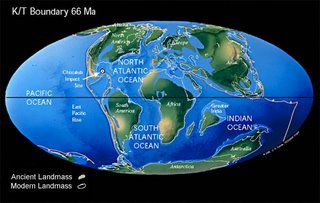
Geology indicates that there has been a direct tectonic connection between Europe and Africa across the zones of Gibraltar and Rif on the one hand, and Calabria and Sicily on the other, at least since the end of the Paleozoic, contradicting plate-tectonic claims of significant displacement between Europe and Africa during this period.

By 6 million years ago, Spain and Africa collided, raising a mountain barrier and sealing off the western end of the Mediterranean. River inflow is not enough to maintain the level of the Mediterranean, which dries out.


It is widely believed that H. erectus originally migrated from Africa during the Early Pleistocene, around 2.0 million years ago, and dispersed throughout most of the Old World, reaching as far as Southeast Asia.
But there were already another race of H. erectus habitating Europe. In fact they were lost ancestors, that got separated when both continents ripped apart.
The Gibraltar Strait was now open and they couldn't migrate South to Africa like they undoubtedly used to do when both continents wre connected.
They were Neanderthals, and they had evolved adapting to the rough environment. And so, they started to grow hair to fend off the cold, and adapted to bush or jungle conditions, hence his shorter average height.
Cro-Magnon evolved on open plains, hence his tallness, his long-sightness, and right-handness.
No need for hair either, when living in warm climates.

A vey large portion of the Neanderthal population perished in Poseidonis, an island about the size of Ireland, situated in the Atlantic Ocean opposite the strait of Gibraltar, that sank in a major cataclysm in 9565 BC.
Geologist Christian O'Brien believes that Poseidonis was a large mid-Atlantic ridge island centred on the Azores, that had originally measured 720 km across from east to west, and 480 km from north to south, with high mountain ranges rising over 3660 metres above sea level. Before or during its submergence, it tilted by about 0.4° with the result that the south coast sank about 3355 metres but the north coast only some 1830 metres. Only the mountain peaks remained above the waters, and now form the ten islands of the Azores. O'Brien thinks the island could have sunk within a period of a few years or even months, and points out that six areas of hot spring fields (associated with volcanic disturbances) are known in the mid-Atlantic ridge area, and four of them lie in the Kane-Atlantis area close to the Azores.

http://ourworld.compuserve.com/homepages/dp5/sunken.htm

The rest of the European Neanderthals were wiped out in a relatively short period of time. They vanished at exactly the same time that Cro-Magnon started to colonize Europe, bringing along lethal sexual transmitted diseases.

But the last ones that could interbred with the new-comers did pass on their genes and produced hybrids that are today's Iberians.
And British...
People of Celtic ancestry were thought to have descended from tribes of central Europe. Professor Sykes, who is soon to publish the first DNA map of the British Isles, said: "About 6,000 years ago Iberians developed ocean-going boats that enabled them to push up the Channel.
Before they arrived, there were some human inhabitants of Britain but only a few thousand in number. These people were later subsumed into a larger Celtic tribe... The majority of people in the British Isles are actually descended from the Spanish."

If you look at History, you'll see that both countries, Spain and Britain, have conquered about every corner of the world. Many would argue that this is a symbol of lack of humanity, but the truth is that 500 years ago any country would have tried to expand their borders and only the ones with available military force could do it. It happens even in today's civilized world.
Although the main objective clearly was looting, both countries also made an effort to export their beliefs to the conquered territories, Spain in the form of religion, and Britain as cultural assets.

If two small nations like Spain and Britain had agreed to join their forces, they will now control Planet Earth.
Instead they chose to fight each other.
Typically Neandertalish.

| | 2 comments